Sales page
A brand that belongs together.
Example client’s price, not Ignite’s: $2,000 · 2 weeks
Page copy. Not a live page.
A sales page. Five emails. Three ads. Six posts. A 14-day plan. Images that match.

Why use a workflow?
You can ask a chat for a sales page. You can ask again for an email. Each answer can sound fine and still describe a different offer.
This workflow starts from one brief: the six facts you supply. Your first reply gives you a short summary of your facts, up to three questions and your first finished ad. If the questions don't change your price, offer or next step, your sales page comes in the same reply. The emails, the ads, and the posts use those same facts. You read a finished example first, then run a five-point check. When one fact changes, you see which pieces state it and which stay put.
That is the reason to use it more than once. You still review the words, save the files, and publish or send in your own tools.
In the fictional Emblemetry example, the price is $2,000 and the timeframe stays two weeks. A price-only change rewrites the pieces that state $2,000 and keeps the rest. This is a map of the copy on this page, not a second campaign and not a measured result.
The post “Before you start an identity project” also states the price in its image description. The email “The decision behind a consistent brand” states the two-week schedule and does not state the dollar amount, so a price-only change leaves it. The image files on this page are the original example. They were not re-rendered for a different price.
This does not claim better results than an ordinary ChatGPT conversation.
What does one campaign look like?
Emblemetry · fictional worked example
This is an example campaign for a sample business. The next words are written in the fictional client’s voice. $2,000 and two weeks are that example’s price and timing. They are not Ignite’s price, and Ignite does not sell a brand identity. If you sell a different service, your campaign uses your facts. This one uses a branding business so the page, the email, the ad, and the post are easy to tell apart.
Sales page
A brand that belongs together.
Example client’s price, not Ignite’s: $2,000 · 2 weeks
Page copy. Not a live page.
You have a proposal ready to send. The work is right. The presentation looks like it came from a different business than your website.
Email 1 of 5. Not sent.
Ad
Post
Fictional Emblemetry worked example from the campaign package. $2,000 and two weeks are the example offer, not Ignite pricing or a customer result.
Emblemetry is a fictional branding business. What follows is one campaign for that offer: the sales page, five emails, three ads, and six posts, with the images that belong to them. Ignite does not sell this identity package. You do not need to buy anything to read it. The private workflow is not included.
Read the sales pageSkip to the posts
Emblemetry’s fictional Complete Brand Identity includes logo design, brand guidelines, visual assets, social templates and launch assets. Its established example price is $2,000 and timeframe is two weeks. Neither is Ignite’s price or delivery promise.
Currency denomination, timing conditions, payment terms, revisions, licensing and a live destination are not supplied. The illustrative audience and ‘See if your project fits’ inquiry wording are teaching choices, not validated buyer research or a working order process. Resolve unknown terms before any real priced offer goes live.
Fictional example. The client’s price, not Ignite’s.
P01 · Sales page
Fictional Emblemetry sales page · copy specimen, not a hosted offer
Your website, social posts and launch materials should look like the same business.
Emblemetry brings them together with Complete Brand Identity: logo design, brand guidelines, visual assets, social templates and launch assets, developed as one visual system.
Example client’s price, not Ignite’s: $2,000 · 2 weeks
See if your project fits
Open your website beside your latest social post. Then look at the presentation you send a prospect. Would someone recognize the same business without reading its name?
Perhaps the logo works, but every new graphic starts another debate about fonts, colors and layout. Perhaps your service has changed while your identity still belongs to an earlier version of the business.
You want to send the proposal, publish the post and introduce the business without each piece looking like a separate design project. That takes a direction the whole set can share.
Give your next post, proposal and launch graphic a system to follow. We establish a direction, develop the identity, and carry its colors, typography and visual language into the agreed social and launch assets.
The aim is concrete: a set of materials that belongs together, with guidance you can refer to when making the next piece. You should be able to see the relationship between your logo, a post and a launch graphic, rather than having to invent it each time.
A visual anchor for the identity. It is developed alongside the wider system so the other materials have something consistent to build on.
A reference for using the identity. The guide explains the agreed visual direction and how its elements work together across your materials.
Supporting brand elements that carry the identity beyond the logo. These give layouts a common visual language without putting the mark in every available space.
Reusable layouts built around that same identity. You supply the subject and copy; the template gives each post a consistent starting point.
A matching set of graphics for introducing the identity. The intended uses and required formats are agreed in the project brief.
You agree the asset quantities, formats and revision allowance before work starts, so both sides know what the finished set needs to contain.
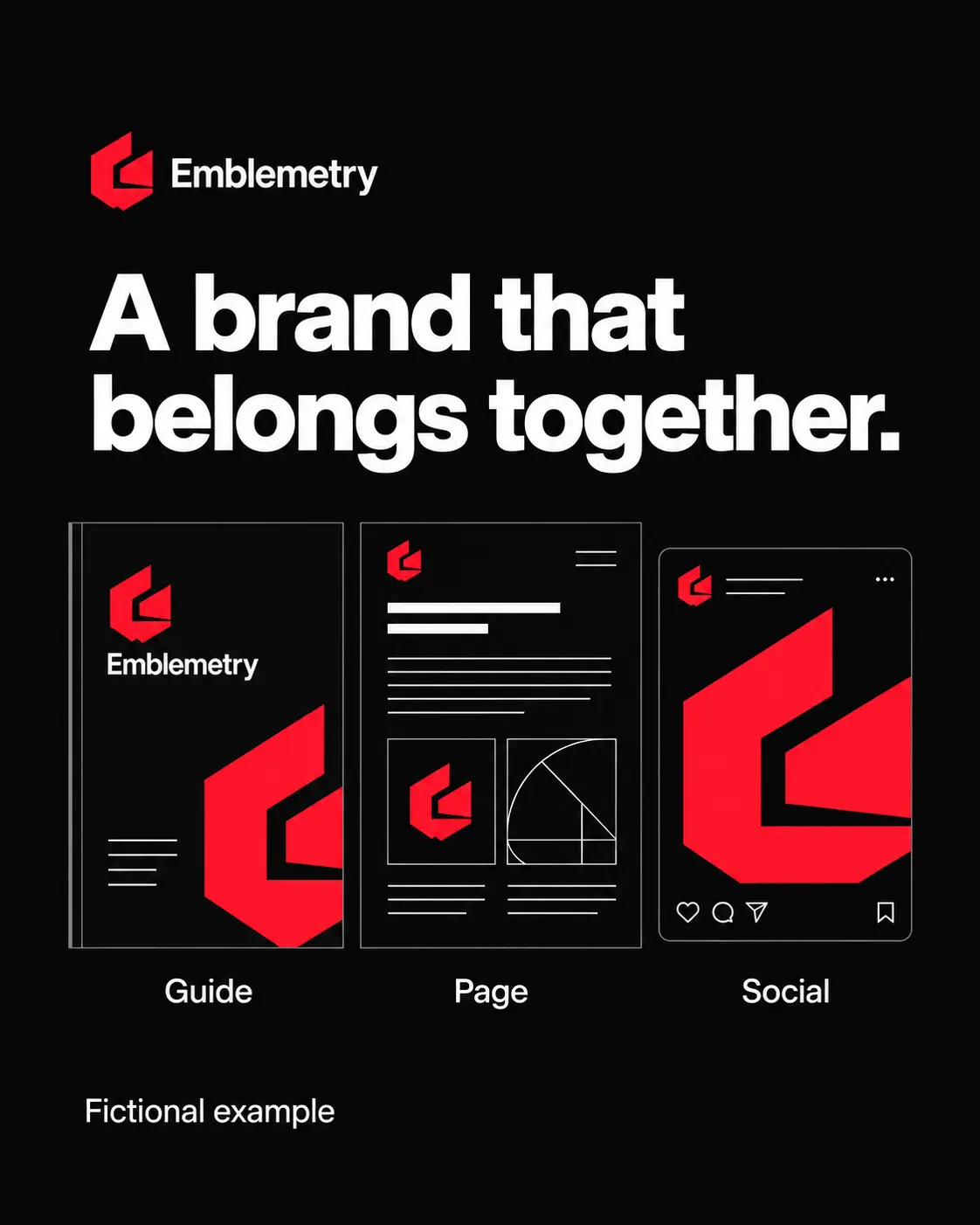
The Emblemetry example uses a red geometric mark, white typography and a predominantly black identity. The mark, guide and social layouts share the same visual decisions.
Look for the repeated decisions: the same mark, the same approach to type, the same role for red. The layouts can change while the visual direction stays recognizable. That continuity is the result to inspect in this fictional demonstration.
Share your business, audience, existing materials and the places where the identity needs to appear. We confirm the scope, inputs and review schedule before the project begins.
The logo, typography, colors and supporting elements take shape together. You review the direction against the brief, with consolidated feedback from your decision-maker.
The agreed direction carries into the social templates and launch assets. You receive the identity materials and guidelines for using them.
The two-week schedule starts after the agreed brief and required inputs are ready. It depends on feedback arriving on the agreed review dates. If those dates move, the delivery date is reviewed with you.
Complete Brand Identity is a $2,000 one-time project. Before you commit, the written scope confirms the asset list, revision allowance, payment schedule, applicable taxes, cancellation terms and any third-party costs.
The package covers visual identity and the agreed assets. Website building, ongoing social management and paid advertising sit outside this project.
This package is intended for a service business with an established offer and audience that needs its visual materials to feel connected. It is especially relevant when you are preparing a relaunch or replacing a collection of mismatched designs.
If you are still deciding what to sell or who to serve, make those decisions first. A visual identity can express your direction; it cannot choose your business model for you.
Include it with your inquiry. Whether it can anchor the new system needs to be agreed before the scope is accepted; do not assume every existing mark can be retained unchanged.
No. This is a brand identity project. The example website shows how the identity can appear on a page; it is not an included website build.
A clear description of the business and its audience, existing brand materials, the places you plan to use the identity, and one person to consolidate feedback. The exact input checklist is agreed with the brief.
No. You agree the revision allowance in the written scope before work starts.
The way your business looks across the agreed materials. You receive the identity and assets to apply it. Customer inquiries and sales are not guaranteed outcomes of a design project.
Share what your business does, who it serves and which materials currently feel disconnected. Include your intended launch date, if you have one. We will review the fit and confirm scope and terms before you decide whether to proceed.
See if your project fits
Demonstration terms: Emblemetry is fictional. USD, one-time billing, the input-ready start condition and the process above are authored assumptions for this example, not owner-confirmed service terms. This page is not taking orders. No customer result is claimed.
E01 · INTRODUCTION
Fictional email · not sent
Preheader: Give the next thing you send a familiar face.
You have a proposal ready to send. The work is right. The presentation looks like it came from a different business than your website.
Changing a font helps for now. Next week, a social graphic raises the same question: what should this actually look like?
A shared visual direction gives those decisions somewhere to start.
Emblemetry's Complete Brand Identity connects logo design, brand guidelines, visual assets, social templates and launch assets. The guide sets the direction; the applications show how to use it.
Look at the example as a set. Can you see the same identity carrying from one piece to the next? That is the job this package is built around.
See if your project fits
Emblemetry
E02 · MECHANISM
Fictional email · not sent
Preheader: Agree the visual rules before making another isolated graphic.
A useful brand identity gives you decisions you can reuse.
Which type styles lead? Where does the accent color belong? What makes a social graphic feel connected to the page it sends someone to?
Answer those questions separately for every asset and the designs can drift. Establish a shared direction first, and the logo, templates and launch materials have something to follow.
That is the logic behind Emblemetry's Complete Brand Identity. We agree the brief, develop the visual system, then apply it to the agreed materials.
You bring the business context and consolidate feedback. The two-week schedule begins when the brief and required inputs are ready, with review dates agreed together.
If your next launch needs more than another disconnected graphic, review the package and tell us where the identity needs to work.
See if your project fits
Emblemetry
E03 · SCOPE AND VALUE
Fictional email · not sent
Preheader: The guide and applications are part of the project.
A logo file is a starting point. The next question is how to use it.
Complete Brand Identity includes five connected parts:
- Logo design: the visual anchor - Brand guidelines: the reference for applying the identity - Visual assets: supporting elements for your layouts - Social templates: reusable starting points for posts - Launch assets: matching graphics for introducing the identity
The value is in how they relate. The template should follow the guide. The launch graphic should belong to the same system as the logo.
In this fictional Emblemetry example, the project is $2,000 over two weeks. Exact quantities, formats and revision allowance are agreed before acceptance. Website building and ongoing social management are outside the package.
If you need the whole visual system to come together, see the full scope before making an inquiry.
See if your project fits
Emblemetry
E04 · OBJECTION
Fictional email · not sent
Preheader: First find out where the inconsistency actually starts.
Not necessarily.
Before deciding you need a new identity, put three things side by side: your logo, your website opening and a recent social post.
If the logo still fits your business, ask whether the problem is how it is being applied. Inconsistent type, color or layout can make related materials feel unrelated.
If the mark no longer fits what you do, that is a different brief.
Emblemetry starts by agreeing the problem the project needs to solve. Include your existing logo in an inquiry so its role can be discussed before scope is accepted.
Complete Brand Identity covers logo design, guidelines and matching visual, social and launch assets. It does not assume that every business needs the same change or that a visual refresh guarantees more sales.
Review the package if your materials need a shared direction. Then tell us what you want to retain and what needs to change.
See if your project fits
Emblemetry
E05 · DECISION
Fictional email · not sent
Preheader: Bring the actual materials to the brief.
Before you ask for a new visual identity, make a short list of where it needs to work.
The page people visit before they inquire. The proposal you send afterward. The social posts and launch graphics that introduce your work.
Next to each, write one word: keep, improve or create.
Now you have the beginning of a useful brief. It shows what already works and where the pieces need a shared direction.
Emblemetry's Complete Brand Identity brings together logo design, brand guidelines, visual assets, social templates and launch assets for $2,000 over two weeks. The schedule begins when the agreed brief and required inputs are ready, with feedback due on agreed review dates.
The project creates the identity and agreed assets; it does not build the website or run your social accounts.
If your offer and audience are settled, bring your list to a project inquiry. Scope, quantities, revision allowance and terms are agreed before you commit.
See if your project fits
Emblemetry
A01 · OUTCOME
Fictional ad · not run
One identity across your everyday materials
Your website, social posts and launch materials should look like the same business. Emblemetry brings logo design, guidelines, visual assets, social templates and launch assets into one identity. Explore the fictional $2,000, two-week package and see whether its scope fits your project.
See if your project fits
A02 · PROCESS DEMONSTRATION
Fictional ad · not run
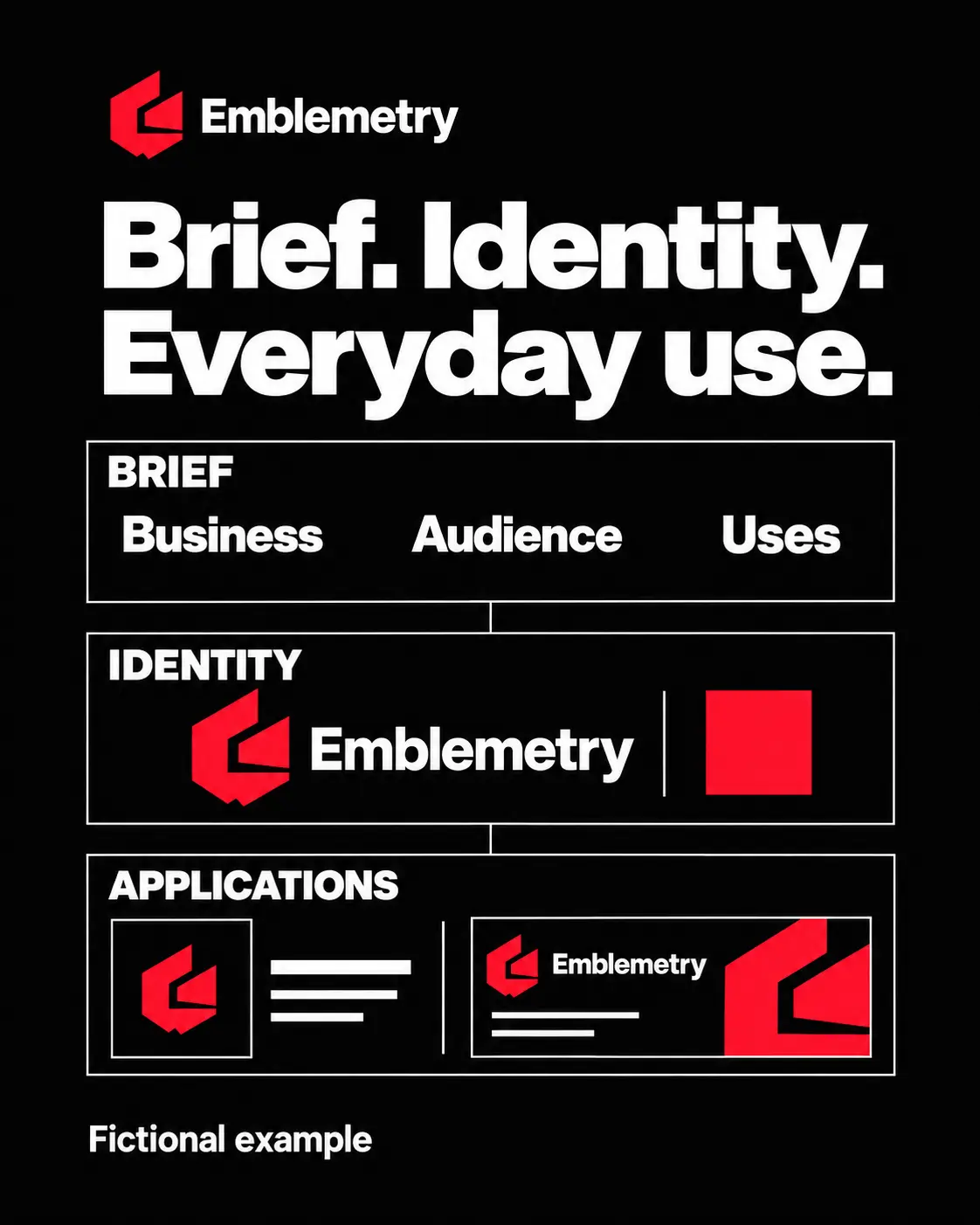
See how the identity carries through
One mark does not settle every design decision. Emblemetry agrees a brief, develops the visual system, then applies it to social and launch materials. Inspect the Complete Brand Identity scope before you inquire.
See if your project fits
A03 · BUYING OBJECTION
Fictional ad · not run
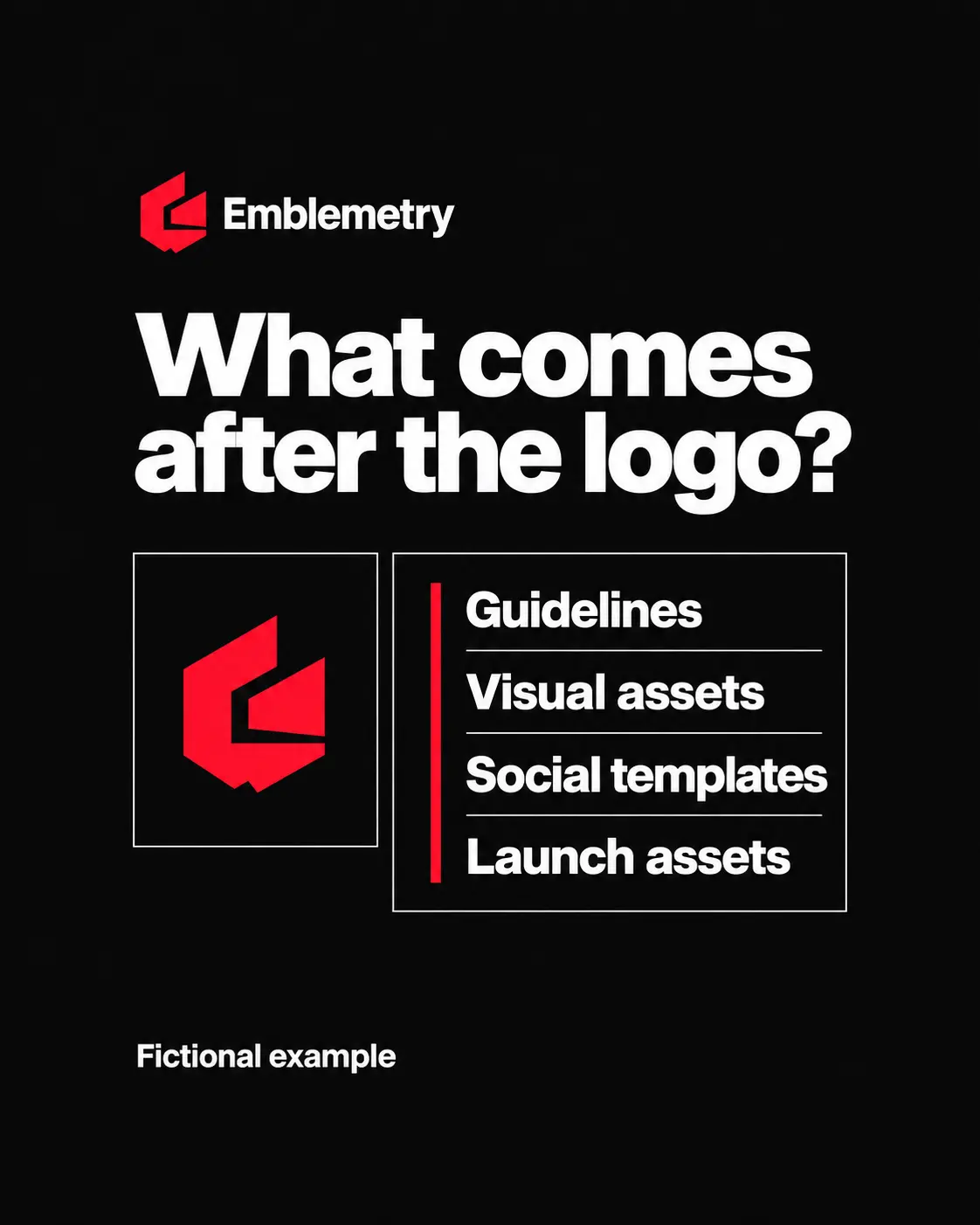
Review the five-part identity package
A logo can be a starting point. What gives your next post or launch graphic the same look? Emblemetry pairs logo design with brand guidelines, visual assets, social templates and launch assets. See exactly what the fictional $2,000, two-week project covers.
See if your project fits
S01 · RECOGNITION
Fictional post · not published
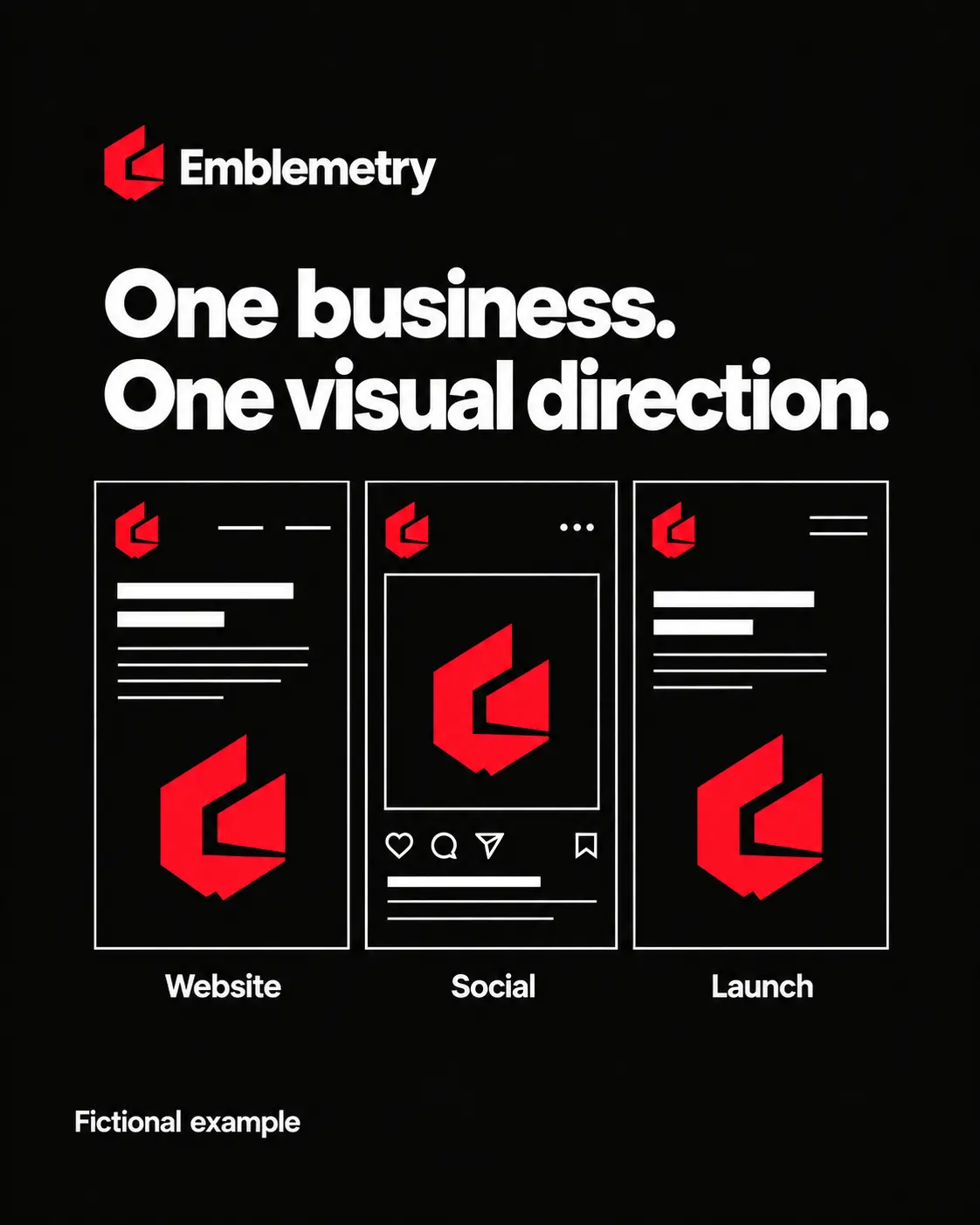
Open your website, your latest social graphic and one launch asset side by side.
Do the colors, type and layouts suggest the same business?
If the pieces feel disconnected, write down the first mismatch you notice. That gives you a specific place to start, rather than a vague instruction to make everything look better.
A coherent identity gives those pieces a shared direction. Emblemetry's Complete Brand Identity brings logo design, guidelines, visual assets, social templates and launch assets together around that job.
See if your project fits
S02 · USEFUL TEACHING
Fictional post · not published
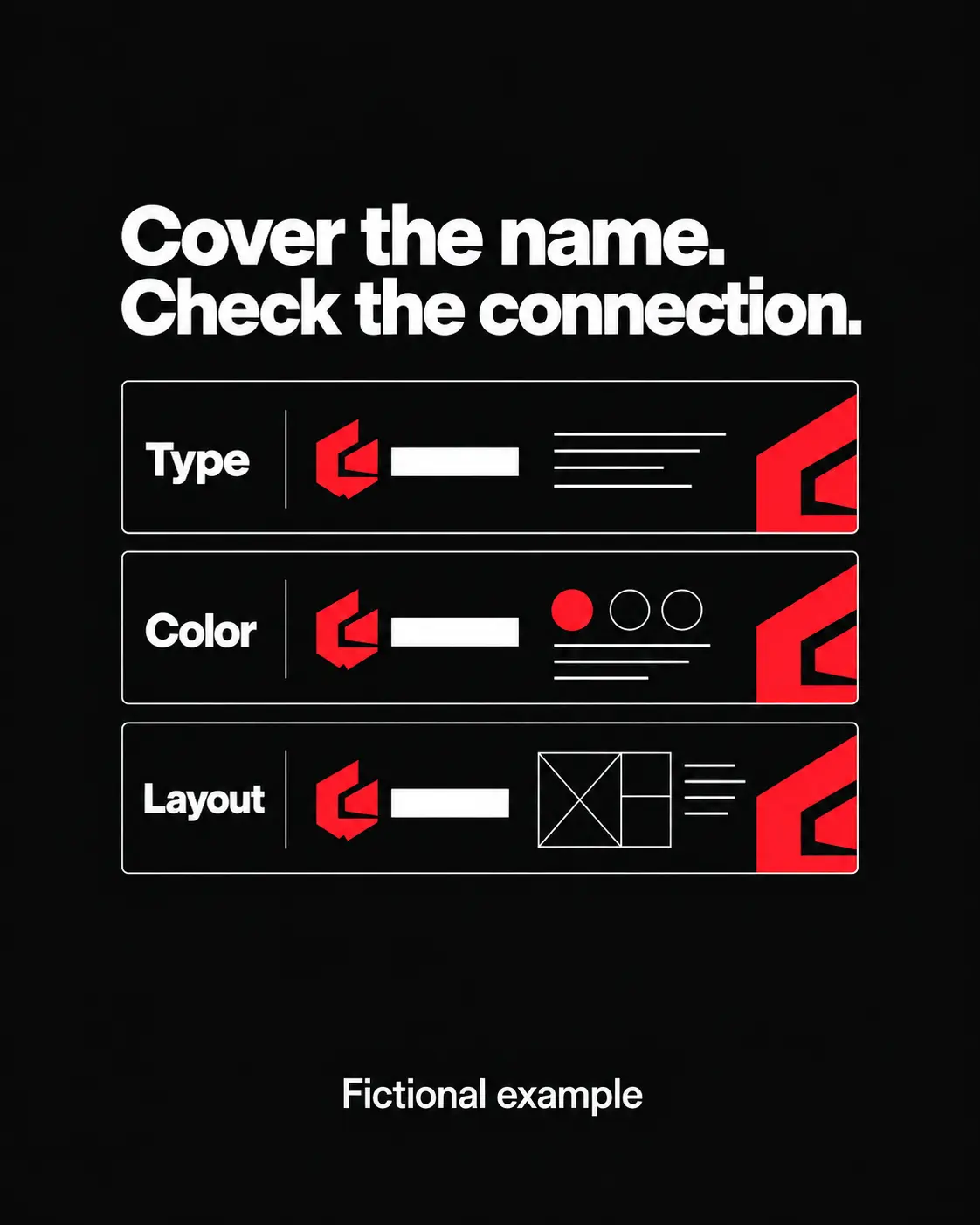
Try this quick visual check:
If the only connection was the name, choose one repeatable rule to strengthen: a type hierarchy, an accent-color role or a consistent layout feature.
This is a practical diagnostic, not a test of whether customers will remember or buy from you.
Emblemetry's identity package develops that shared visual direction and carries it into the materials you use.
See if your project fits
S03 · PROCESS DEMONSTRATION
Fictional post · not published
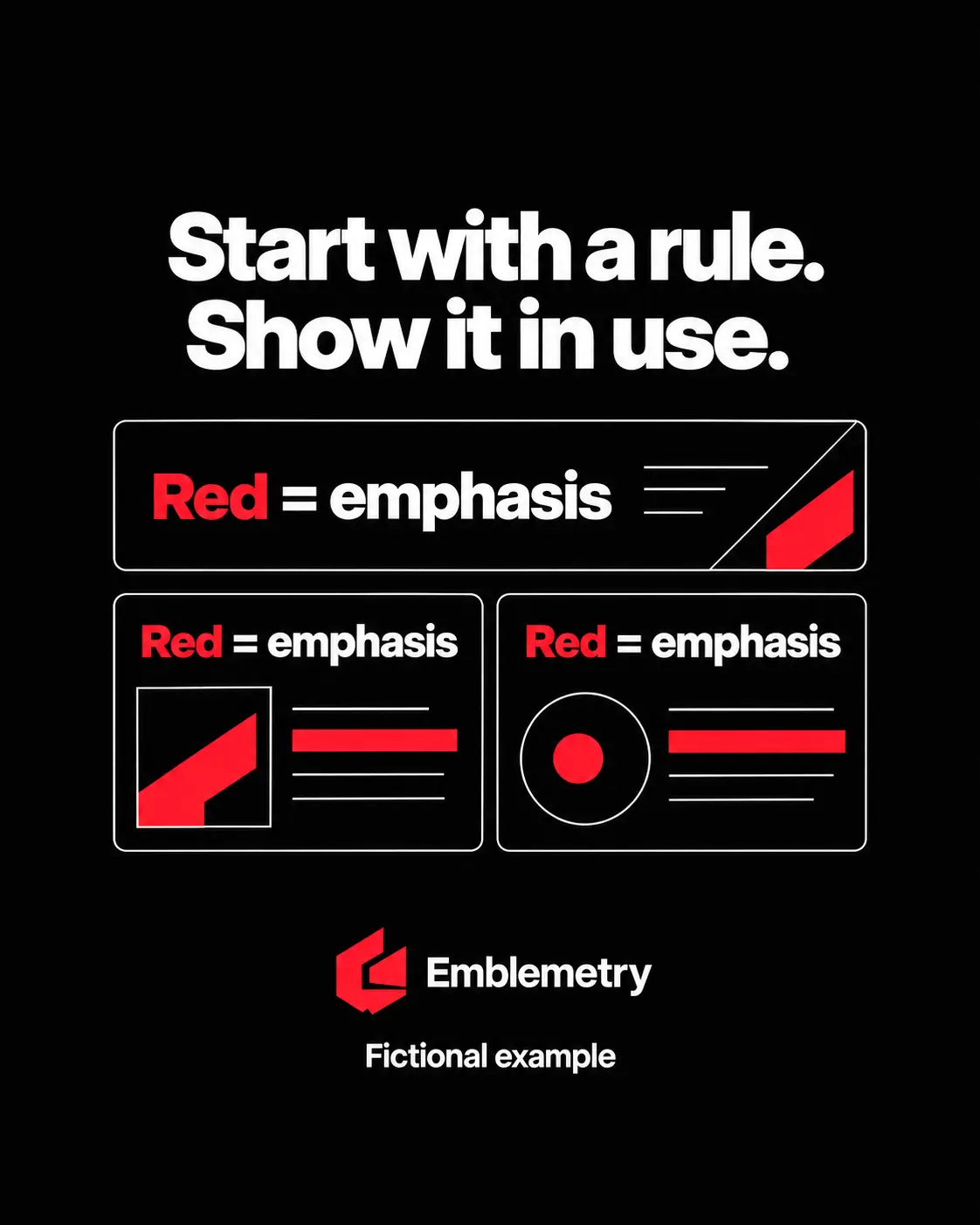
A brand guideline earns its place when you can apply it.
Take a simple fictional rule: use red for emphasis.
On a page, it might highlight one important phrase. On a social graphic, it might mark the key idea. The applications differ; the color keeps the same job.
Try it with one rule from your own identity. Put the rule beside two actual examples. If the examples contradict it, either the designs need an edit or the rule needs to be clearer.
That connection between guidance and application is central to Emblemetry's Complete Brand Identity.
See if your project fits
S04 · SCOPE CLARITY
Fictional post · not published
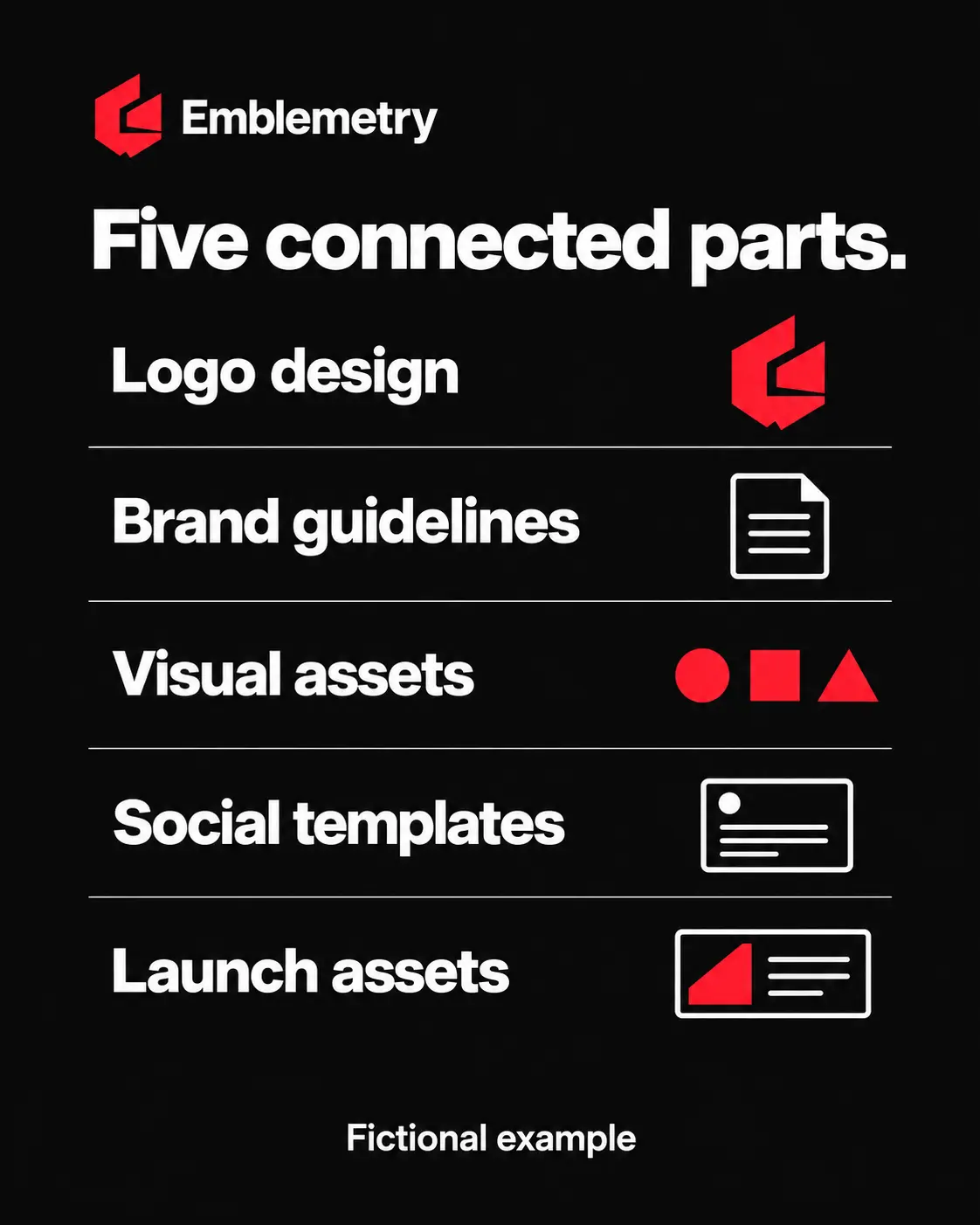
When comparing identity proposals, look beyond the word “complete.”
Ask what will actually be handed over and where you can use it.
Emblemetry's fictional package contains five categories:
- Logo design - Brand guidelines - Visual assets - Social templates - Launch assets
The next questions matter too: how many, in which formats, and with which revision allowance? Those details must be agreed before a project is accepted.
The example price is $2,000 over two weeks. It is a visual identity project, not a website build or ongoing content service.
See if your project fits
S05 · OBJECTION
Fictional post · not published
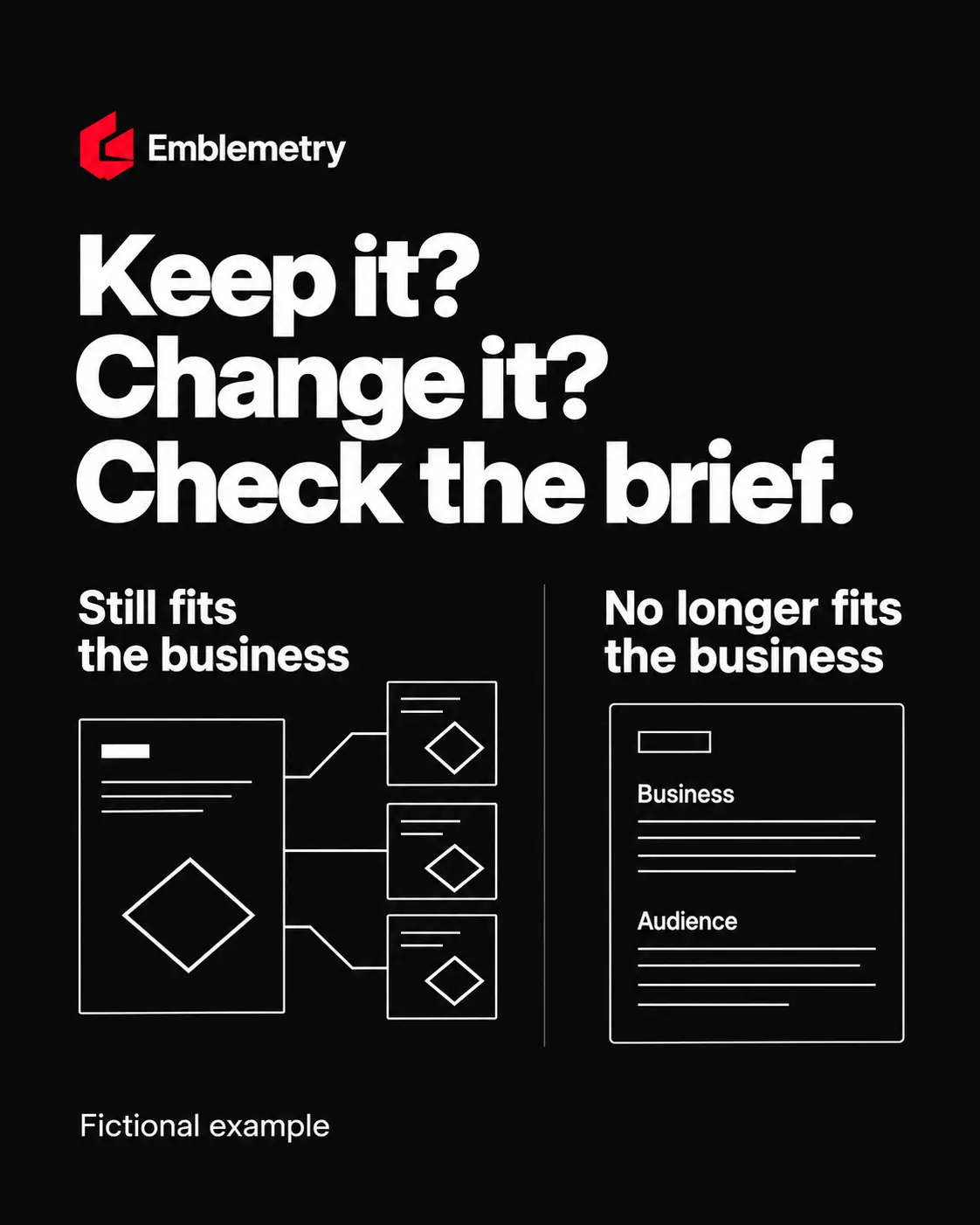
A familiar logo does not automatically need replacing.
Ask two different questions:
Does the mark still fit the business you are building? Are you applying it consistently?
If the first answer is yes and the second is no, start by examining the applications. A new mark alone may leave the underlying inconsistency unresolved.
If the business itself has changed, explain that change in the brief before discussing visual options.
For an Emblemetry inquiry, include the current logo and what you want to retain. Its role is agreed before the Complete Brand Identity scope is accepted.
See if your project fits
S06 · INVITATION
Fictional post · not published
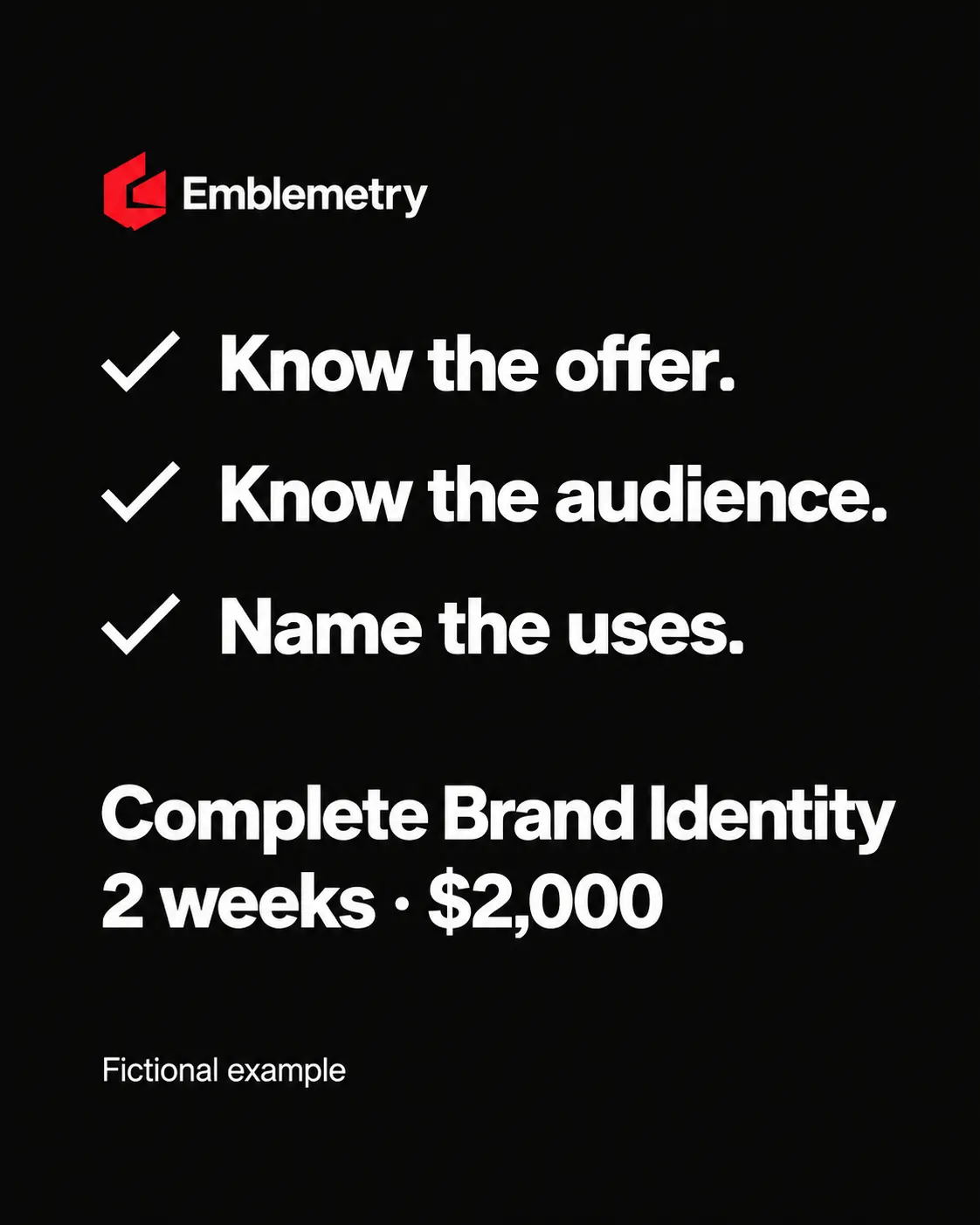
Before commissioning a visual identity, write down:
What you sell Who it is for Where the identity needs to appear
Then name the person who will gather inputs and consolidate feedback.
Those decisions give the design project a useful starting point.
If you have them in place, Emblemetry's fictional Complete Brand Identity may fit the next step: logo design, brand guidelines, visual assets, social templates and launch assets for $2,000 over two weeks.
The schedule starts after the agreed brief and required inputs are ready, with feedback due on the agreed review dates. Share your project through the package page; scope and terms are confirmed before you decide.
See if your project fits
Mark each draft: matches / needs correction / fact missing. Fix a changed fact in every affected draft, including image wording and captions. Keep the corrected files together and move old versions out of your current folder.
The download matches this page: the fictional sales page, five emails, three ad concepts, six posts and the five-point check. It does not include the private workflow.
What is in the package?
The connected campaign
9 ad and social images. They need ChatGPT with image generation. A text-only account can draft the words and cannot make these images. Fictional examples show the intended output; you create and check your own assets.
The 9 fictional package images are on this page with the ads and posts they belong to. They are separate from the images you generate, inspect and save for your own offer. Images need ChatGPT with image generation, or any AI chat that can make images.
Counts describe the guided workflow. They are not a file you can download from this page, and they are not a measured result. Keep the final text, actual image files and checkpoint together. Then publish or send through your own tools.
How do I use it?
A guided workflow
Buyer and job. Exact offer and terms. Next action and destination. Evidence and usage rights. Voice and visuals. Campaign context, capacity, and who you may contact. Unknown stays unknown.
Your first reply gives you a short summary of your facts, up to three questions and your first finished ad. If the questions don't change your price, offer or next step, your sales page comes in the same reply. Then follow START-HERE.txt. The campaign is one sales page, five emails, three ad concepts and six posts. The 9 matching images need ChatGPT with image generation. About 20–50 minutes to the first ad and sales page, and about 1–1½ hours for everything. Then inspect the saved files.
Download the brief or the sample before you leave this page. This page does not include the workflow folder. When you are running the workflow, save the whole campaign folder, the checkpoint, and every referenced source. Current copy alone is not that folder.
Is this for me?
Can I try it first?
One offer. One connected campaign.
The free sample is the fictional sales page, five emails, three ads, six posts and the five-point check. The paid workflow, when access exists, is the reusable run around your own offer. Purchase opens soon.
What should I know?
An existing offer, the intended buyer, actual scope and terms, a real next-step destination, and any proof or images you have permission to use. Unknown facts are fine to flag; facts that affect the offer need resolving before publication.
Your first reply gives you a short summary of your facts, up to three questions and your first finished ad. If the questions don't change your price, offer or next step, your sales page comes in the same reply. Then follow START-HERE.txt. The campaign is sales-page copy, five emails, three ad concepts, six posts and 9 matching images. Those images need ChatGPT with image generation. The fictional worked example shows the structure. Your campaign uses your own offer facts and needs your review.
You create sales-page copy and a section-by-section visual brief for your website tool. Hosting, website implementation, email sending, ad spend and automatic publishing are separate.
Use ChatGPT for the text workflow. The 9 matching images need ChatGPT with image generation. You also need somewhere to save your files. Account features and limits vary. Paid ChatGPT features are separate.
Update the approved offer record and revise every piece that states the changed fact. In the fictional example, a price-only change touches the sales page, two emails, two ads, and two posts, and leaves the pieces that never state that price. Then inspect the image files. This page does not include a second rendered set. This brief clears its review whenever a fact changes.
This page does not include the campaign folder, so these steps cannot be followed here. When you are running the workflow, use SAVE and keep the entire campaign folder, including the checkpoint and all referenced original source/style files and version history—even outside the current-output folder. In a new chat, provide the complete saved set and use RESUME. Current outputs alone are not a resumable backup.
Campaign help covers access, files, images, saving and recovery. The existing Support route remains available. No response deadline or extra support is promised.
Purchase opens soon. Billing, access, license, updates, support and campaign-specific refund terms are not set yet. This does not change the separate legacy kit terms.
For your own business. Agency or client use: contact support.
Where do I start?
Your offer
Six facts. Then a sales page, emails, ads, posts, and images that use them.
For your own business. Agency or client use: contact support.
The example is free. Purchase is not open.